Thanks to a good tip from a user at a forum I frequent, I decided to test with just the FA 50mm f1.4 lens on both bodies. The difference this time is that I covered the data connections between the cameras and lens for the second sample set.
Reason for the testing:
Find out if the K-7 is “cooking” the ISO/exposure settings when it sees that a wide aperture lens is attached. Also, analyze the data to better understand how CCD (K10D in this case) and CMOS (K-7 in this case) sensors record similar data.
The test components:
- K-7 camera body (CMOS type imaging sensor)
- K10D camera body (CCD type imaging sensor)
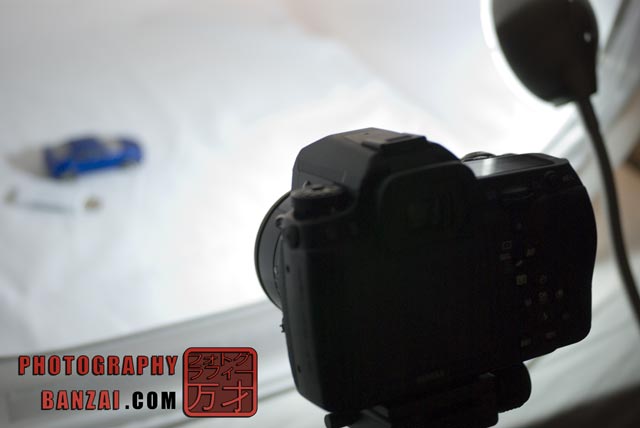
- Pentax FA 50mm f1.4 allowing the data connection and disabling the data connection by covering the connections with tape. I can confirm success as the EXIF data does not list the lens when covered.
- A single 20-LED lamp for lighting and a toy car as the subject inside a light tent. Another lamp around 4 feet away due to it being night time in the test.
- A solid tripod
Camera settings:
16-bit DNG format, f1.4, 1/200s shutter speed, ISO 200
Manual white balance (single frame taken by the camera)

This image below was constructed from the four test images in Photoshop CS2. In the RAW converter, “As shot” was used without any modification.

As you can see it’s a bit odd how the white balance on the K-7 changed even though it should have been exactly the same between shots. My guess is that the camera defaulted to auto white balance after I taped the data connectors on the lens, but I can’t tell if that happened or not from the EXIF data. However, it might be evidence that the K-7 is doing something special when it sees a FA50mm attached even if settings are all manual. It also looks like I shifted the tripod mount slightly, which could account for the difference. Besides that, the pictures themselves don’t seem much different between the four as expected.
The main test software workflow:
– I used the application Rawstudio to generate 16-bit TIFF files from the DNG images I took. From there I opened the images in Photoshop CS2 and applied “Auto Color” due to the images from Rawstudio being dark without any camera specific modifications to the raw data like Photoshop would apply automatically. My main reasoning for applying that was to stretch out the data for the histogram and give all images a uniform color. I took screenshots of all histogram data for each image and pieced everything together to make things easier to interpret.
The resulting images from both cameras:


With auto-color performed on the images I see no difference between whether the camera knew the lens was the FA50mm or not. Results between cameras seem somewhat similar as well.
Here are the histograms (click for larger versions):


We see again that the K-7 is producing an un-uniform line (aka. “choppy histogram”) compared to the K10D. This happens once auto-color is applied and isn’t visible in the original image’s “scrunched” histogram from those 16-bit TIFF files I generate. The K10D somehow managed to clip the dark reds, which makes me wonder if the K10D was producing an more “uncooked” darker image that fell out of the sensor’s dynamic range compared to the K-7 where dark reds have less clipping. The main issue there is that there is hardly any difference between having the camera know a FA50mm lens is attached or not (unless we speculate that “cooking” also happens when unknown lenses are attached to the body). I actually see more color variation in the K10D image.
Yet again, I am personally not seeing any large red flags to say that newer cameras are gaming the system (testing Pentax specifically), unless we speculate that the K-7 should have been producing an image that was more dark color clipped than the K10D. I’m now wondering if the lesser tone smoothing is part of the evidence that the K-7 isn’t “gaming.” Anyways, it was fun doing the test even if I didn’t find any smoking guns to either side of the question.